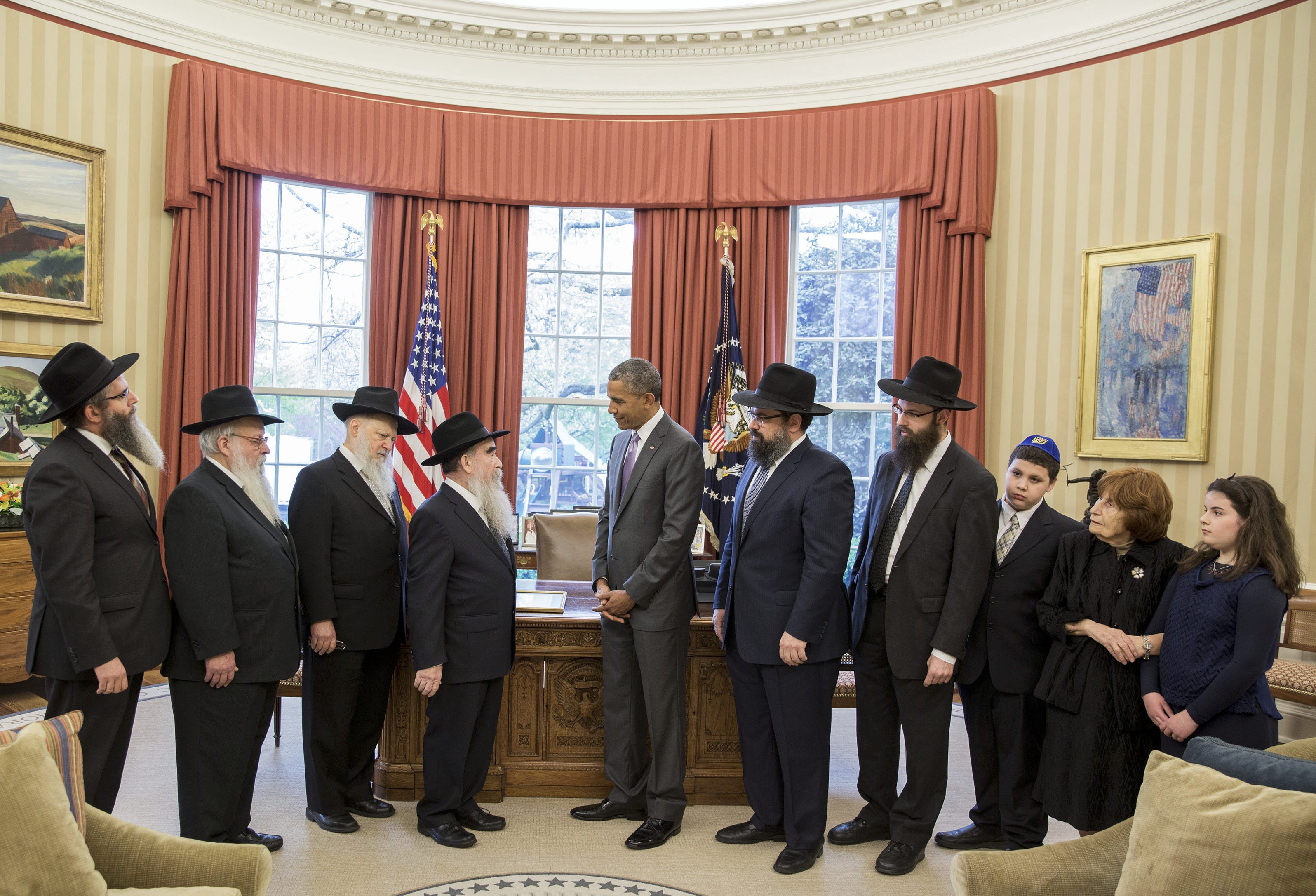
Adam Gopnik is almost invariably interesting and wide-ranging. Here, in the linked article, he writes about the early Jesus (well, it is Christmas), as well as Chabad in explaining messianic belief. Their messianism and attachment to a dead rabbi (the Rebbe), is what distinguishes them from other Orthodox Jews.
But there is something else. While traditional, with a missionary orientation towards other Jews and a particular interest in people of other religions to support with they call the Noahide commandments, Chabad are are also a highly political organisation, at least at a leadership level (networked by family ties), they are astute at being seen as non-political but very close to power in countries around the world to advance their religious and sometimes business agendas. It is hard to say no to a photo-op with religious men in black and a constituency. However, their politics on Israel are essentially reactionary though they are technically non-Zionist. They are also associated, at least through individuals, with all sorts of dodgy or worse business practices, and its members, including those in Australia are not immune from suing each other in the civil courts over property and other matters. There is also controversy about their handling of sex abuse cases as documented in the courts and a Royal Commission in Australia.
They will certainly now have a particular seat at the table with the Australian government in policy and strategy discussions with government. However, they should not remain immune from criticism while at the same time everyone should be careful to not engage in anything remotely anti-Semitic or crudely anti-Zionist. None of this criticism of Chabad is meant to imply that they are not loving and caring people. I have had an excellent Chabad doctor and psychologist, but they may in fact be oblivious to the political games that go on at a higher level of the organization. It is a multifaceted and multi-levelled sect.
Gopnik—
“The Passion and the Resurrection are, of course, at the heart of the Jesus story. Matthew’s account of the empty tomb, followed by ever more elaborate resurrection narratives, serves, Pagels suggests, both to address the practical difficulties of reclaiming the bodies of the executed and to counter skeptical claims that Jesus’ corpse had simply been stolen. Stories of resurrection and rebirth, after all, recur throughout history. Bereavement hallucinations—intensely vivid encounters with the deceased—are reported by as many as half of all grieving people. …
Pagels, rightly but audaciously, likens the evolving belief in Jesus’ Resurrection to that of the followers of the Lubavitcher Rebbe Menachem Mendel Schneerson in our own time. During his life, many devotees of the Brooklyn rebbe believed he was the Messiah, a conviction that he encouraged without ever explicitly confirming—much like the Jesus of the Gospels. After Schneerson’s death, in 1994, only a small portion of believers insisted that he remained physically alive, but others continued to experience him as an enduring presence, a guide still available for inner light and intercession, as Jesus was for Paul.
In times of catastrophe, such beliefs tend to harden into certainty. If the Lubavitcher community had been struck by something on the scale of the Judeans’ loss of the Temple and their enslavement, what are now marginal, hallucinatory visions of the rebbe would almost certainly take on a more declarative, redemptive form. “Long live the Rebbe, King Moshiach forever!”—the Lubavitcher slogan …is, in essence, no different from “Christ is risen.” Both trace the same arc from comforting spiritual presence.
Chabad, as in other attacks around the world, has new mratyrs for whom they will seek comfort in the Rebbe and it will also play out politically in Australia.
See archive.today/ZDo20