This is a reflection on a very good piece in the quality K-La Revue about Jürgen Habermas, a polymath whom I have tried to use in my work over the years. He died in March 2026. As Julia Christ argues, he was relentlessly intellectual, not giving an inch, expecting the reader to grasp and engage with all that he had read and considered, whether it be the complicity of German intellectuals in Nazism, the nature of rational communication and action, or the idea of the public sphere.
Habermas has challenged me for decades. I first read Towards a Rational Society in the early 1970s and tried to understand his thoughts about social control and emancipation. They are still entirely relevant to the world of AI. More recently, I spent a year, on and off, trying to connect ideas in The Theory of Communicative Action with other theories about designing technical systems. After one round of peer review (too smarty-pants), I gave up. But his desire for freedom and emancipation - a fill and rich life - always comes through.
So, despite my struggles with him on one front, here, I take up his concern about wartime complicity and relate it to the situation in Israel. I am pretty sure that Habermas would have opposed what I say, because was a signatory to a widely criticised statement in defence of Israel’s war. I explain that as part of his ongoing trauma from WWII, which he lived through, and his sense of duty as a German to defend what he saw as Jewish interests . But he was also ninety-seven by 7 October 2023. One could hardly have expected a very old person to see through the emotive political fog around the war.
Julia Christ’s essay in K-La Revue focusses on ideas from a famous newspaper article by Habermas about sympathy for Nazism within the German intellectual class, and Martin Heidegger in particular. He published it in 1953 in a leading German newspaper:
“[This text] serves but a single question: can the planned and methodical murder of millions of human beings, which we all know today to have taken place, be rendered comprehensible as a fatal aberration within the history of Being? Is it not rather the actual crime of those who committed it in full possession of their faculties — and the guilty conscience of an entire people? Have we not had eight years since then (since 1945) to take the risk of confronting what was, what we were? Is it not our eminent task to shed light on the acts of the past committed in full responsibility and to keep their memory alive?”
I take these ideas a step further than in the Julia Christ essay, to look at where Israel and Zionism have gone.
“Being” here is identified with the misguided notion of an authentic human self, free from contamination or domination, connected with the ideals of Nazism concerning an authentic self and Germanic identity. This is also the stuff of ethnonationalism, including Zionism, which can spin right out of control, as it has now.
Very sadly, what has gone on in Gaza, and so much that preceded it in the war against Palestinians, since even before 1948, struck me as connected to these thoughts. I am in no way making a simple parallel between the actions of Israel, its civilian leaders, or its military, and those of the Nazi regime; nor am I saying that all Israelis been planners and executors of war crimes. In fact, Habermas’ ideas are also relevant to other ethonationalist conflicts, where the enemy is dehumanised against the pure, ethnic idea, often back by religious justifications. And I think it is right to say that in all these cases, the ethnonationalists have also considered themselves as unique victims of history and this has been used to justify all sorts of evil. I also include non-Israeli Jews in this discussion, because so many are emotionally, if not personally connected to what has happened, and political bodies that claim to represent our views have remained uncritical if not supportive of Israeli actions.
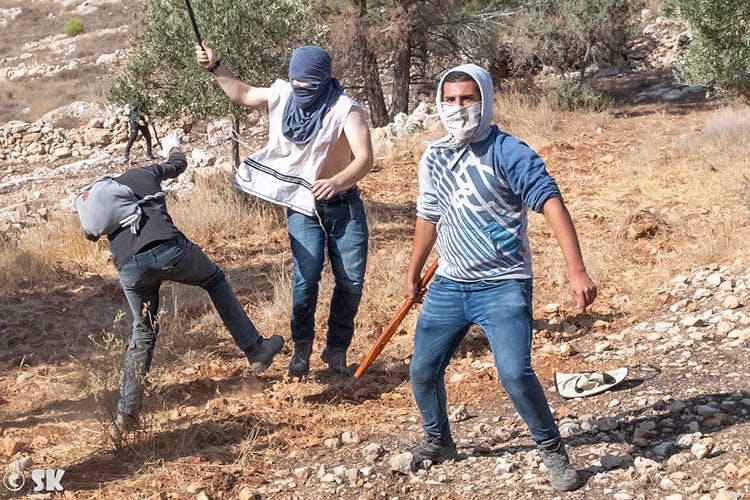
In the case of the Gaza war, we now know enough to know that there are people who have consciously planned, supported, and praised the mass killings. It’s all there, online. In the West Bank faction of settlers is particularly implicated in ethnic cleansing through its pogroms, aided by the military. There are probably many who secretly admire what has happened, though others with a guilty conscience who stay silent. Only a minority have spoken out. I know that I have argued elsewhere that recognising the power of dominant ideologies over Israelis is important as a means of keeping Israelis duped, but we need to admit there there are plenty of people who have become complicit to evil.
What Habermas also observed is entirely relevant to the huge task for the future: “we” are going to “have to account for what was.” It’s not just me who has observed that this is another fracture point in Jewish life around the world. The massive and difficult task, which will encounter enormous resistance, is captured in his question: “Is it not our eminent task to shed light on the acts of the past committed in full responsibility and to keep their memory alive?”
I know that Habermas’ complex arguments, grounded in a very European tradition, are not for everyone. But I find that they offer more deeply considered clues as to what Jews of conscience need to consider than being at the receiving end of the blaming invective and sloganeering that is around the place.
So for me, who is not religious, but connected to tradition, in the spirit of the penitential prayers (Selichot) before Rosh Ha-Shashana, it is more than asking for forgiveness for the evil in our midst, because we cannot forgive genocidal action. We need to seek restorative justice for Palestinians and unyoke ourselves from this disastrous path.
This penitential text stuck me as relevant, attributed to Rabbi Shelomoh be-Rabbi Shemu’el be-Rabbi Eliyyah, an Ashkenazi liturgical poet of the twelfth or thirteenth centuries:
שׁוֹאֵל חֶסֶד בְּהִוָּסֵד, הִנְּנִי תֹאמַר
. מָרוּת יֶצֶר הִבָּצֵר, קָבוּעַ כְּבַמַּסְמָר
. וּלְצַוָּאר כְּמוֹ סַוָּאר, הוּטַל לְמִשְׁמָר
. וּמִי אָזַר זֵר לְזָר, וּמִי אַכְזָר כִּי יְעִירֶנּוּ.
יְהֹוָה הֱיֵה עוֹזֵר לָנוּ:
When those who seek loving-kindness assemble,
say to them, “Here I am.”
Restrain the dominion of the evil inclination,
fixed firmly within us as though with a nail.
Upon its neck, like a heavy yoke,
let restraint be imposed.
For who can gird himself with strength
against this alien adversary?
And who is powerful enough to uproot it?
(Translation via Chat GPT )