(This may appear elsewhere in another form)
I am fiercely opposed to Israel’s actions in Gaza, the occupation, and the broader thrust of the Zionist project. I am equally opposed to campaigns that silence Palestinian voices, punish dissent, or blacklist critics of Israeli policy. I have said so publicly for years and worn the consequences for doing so. But opposition to injustice does not require descending into prejudice or encouraging it. On the contrary, it should make one more alert to it.
.
That is why Abdel-Fattah’s speech matters.
In her Jerusalem Prize address, awarded by the Australian Palestinian Advocacy Network and republished in Mondoweiss, Randa Abdel-Fattah spoke passionately about Palestinian dispossession, censorship, and the destruction of life and culture in Gaza. Much of that anguish is real and deserves to be heard. But alongside those legitimate themes, parts of the speech also leaned on rhetoric about Jews, communal power, and privilege in Australia.
The implication was unmistakable: that Australian Jews, as a community, are collectively bound up with Israeli crimes and beneficiaries of suspect influence. She says, in a strongly Foucauldian turn, “Zionist hunting operates as a technology of power that seeks to survey, neutralize and ultimately eliminate Palestinian and anti-Zionist voices from public life”.
That is where political critique gives way to something uglier.
“The Jewish community gets millions”
Her blunt takeaway line is this: “The Jewish community gets millions in government funding.”
That is not a critique of a grant program. It is not an examination of policy settings. It is not even serious institutional analysis. It is a communal accusation.
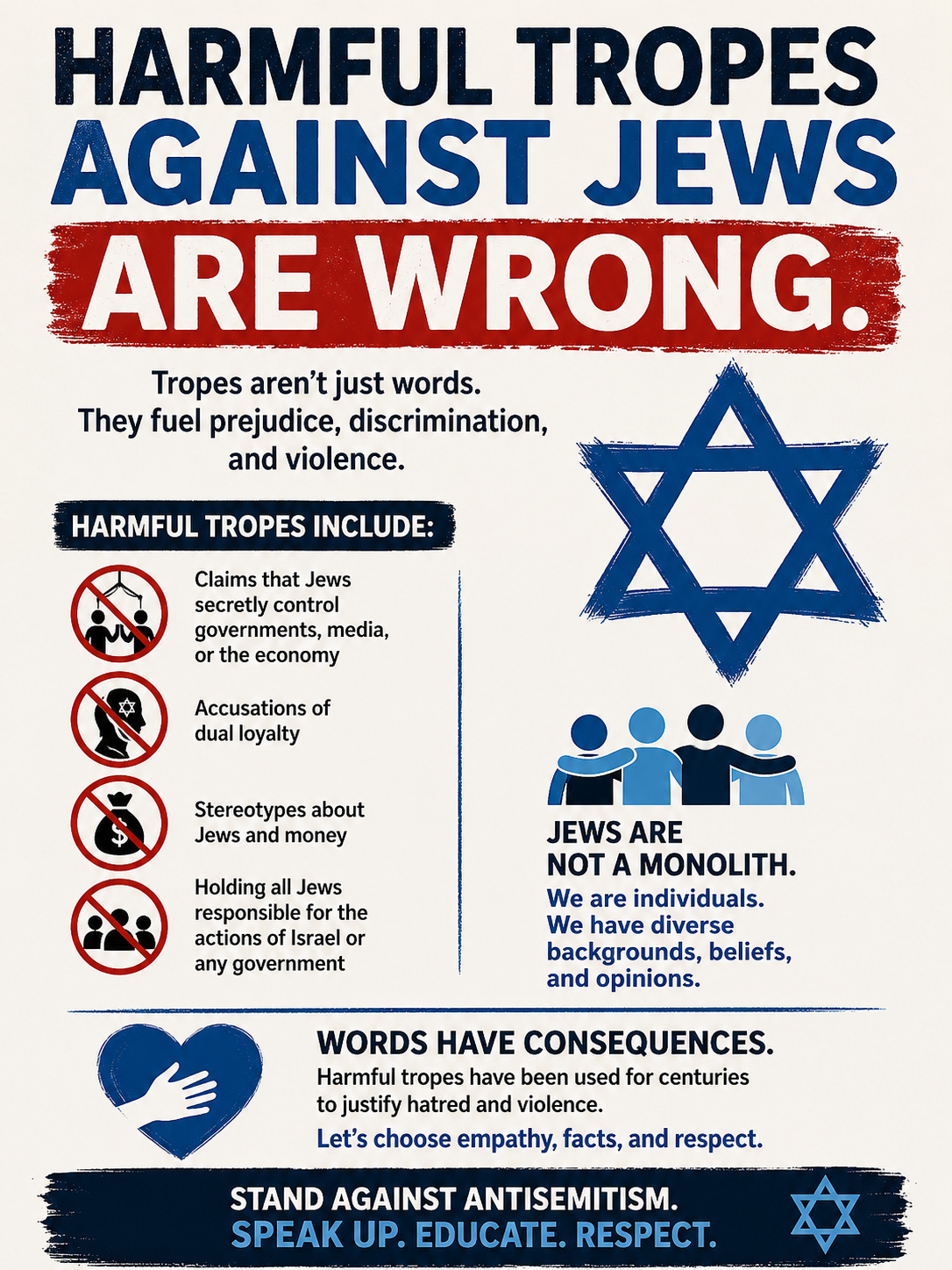
Words like these do not float harmlessly in the air. They create impressions and pictures in people’s minds. They echo old and ugly tropes: Jews as collectively influential, Jews as unusually favoured, Jews as a network able to secure rewards through covert power. One need not utter a conspiracy theory outright. Suggestion and insinuation do the work perfectly well.
Forget about the contested IHRA. She risks crossing lines identified in both the AJDS–APAN statement and the Jerusalem Declaration on Antisemitism. Criticise Israel. Criticise Zionism. Criticise particular lobby groups, donors, governments, institutions — all fair game. But once “the Jewish community” is invoked as a singular beneficiary class or coordinated political actor, one is edging into collective stereotyping. That is not brave truth-telling. It is incendiary politics.
Museums, arts and culture — or a hit list?
One section of the speech turns to museums, arts and culture. Abdel-Fattah notes government support for Jewish cultural institutions, then contrasts that support with the destruction of Palestinian cultural life in Gaza and the need for Palestinians in Australia to rely on crowdfunding.
Jewish museums, Holocaust education programs, a Yiddish cultural organisation founded in 1921, and a proposed local arts precinct are paraded not simply as grant recipients from government and an evil philanthropic family but as evidence of communal privilege somehow morally implicated in Gaza (the same family has given over $200 million to local hospitals and charities). That leap from local institutions to war crimes in Gaza is never properly argued because it cannot be argued.
Public grants are always open to scrutiny. Some may be worthwhile, others wasteful, others debatable. I have my own doubts about aspects of publicly funded Jewish projects. We can also argue about the ethics and politics of philanthropists. But that is an entirely different matter from insinuating that Jewish cultural institutions are tainted because Israel is committing atrocities abroad.
What we see in the speech is not analysis. It is associative guilt.
The $57 million claim — and the missing context
Most revealing of all is Abdel-Fattah’s invocation of the $57 million granted to the Executive Council of Australian Jewry, a familiar bête noire in anti-Zionist circles, in this discussion of culture. I’ve certainly lobbed more than a few critical words in the direction of the ECAJ over the years.
To cite that amount of money while suppressing the context is no small omission. It is the crux of the matter. The audience’s ears would have pricked up hearing about a $57 million handout with no explanation other than the implication it was for a Zionist organisation, and linked to the hunting down of critics, including Palestinians. Aha!
In fact, she neglected to explain what it was for. That money was emergency security funding distributed across roughly 300 organisations nationwide after escalating threats and attacks. It helped pay for guards, cameras, fencing, alarms, secure entrances, and protection for schools, synagogues, childcare centres, and community buildings. Or are these threats fake and Bondi not to be taken seriously? Even the Australian Human Rights Commission which has been heavily criticized by the ECAJ and others for lack of empathy towards the Jewish community, takes the threats and anxieties of the Jewish community (and Palestinians and Muslims) seriously.
Nor was there any mention in the speech that the National Imams Council and Muslim communities have received or are receiving at least $25 million in comparable security support, alongside other funds for community services. We can argue that amount was insufficient. I would. But omission cuts both ways. If public funding is your evidence of structural bias, then all relevant funding must be on the table. Randa Abdel-Fattah is both a senior academic and a lawyer. She should know about putting facts on the table. She could have checked the funding allocations which are publicly available.
When anti-Zionism becomes something else
Criticism of Zionism, Israeli governments, occupation, settlement expansion, and war crimes is entirely legitimate as is criticism of local Zionist organizations including the ECAJ. Or the Zionist Federation of Australia. I’ve done so for years, and been defamed and vilified for it.
But when “Zionist” becomes catch-all term for moral contamination — applied to vast numbers of Jews and Israelis regardless of what they actually think or do — it stops functioning as political language and becomes a dehumanising label. Jewish institutions become “Zionist institutions”. Jewish donors become “Zionist money”. Criminality as if other donors are not to be associated with blood money. Jewish anxieties become fake “Zionist fragility” that deserve no empathy, as Abdel-Fattah has said elsewhere. Real non-Zionist Jews, persecuted by Zionists deserve empathy. Evil Zionists don’t. Jewish communal life becomes suspect by default.
Jews are not a bloc
Australian Jews are not one machine, one donor network, one ideology, or one-party line. They range across the political spectrum. Many wear multiple hats and hold contradictory views. Many support Palestinian statehood. Many think there is genocide. Many want nothing to do with communal politics at all. Many are alienated and distressed. There are massive splits in the Jewish community. Criticize particular organizations. Get your facts right.
To flatten all that into “the Jewish community” as a singular recipient of money and influence peddler is not merely offensive. It is intellectually shoddy. Yet such a view mirrors the same collective logic anti-racists claim to oppose everywhere else.
Why this matters for the Palestinian cause
Because this speech was published in Mondoweiss, these claims now circulate globally. This was not a stray or accidental remark or a clumsy post dashed off in anger. It was a crafted intervention by a gifted writer.
That should trouble everyone committed to Palestinian rights and anti-racism. The left should be prepared to speak out against this kind of activity.
The Palestinian cause is weakened when legitimate outrage is mixed with racist insinuation. It is weakened when real grievances are wrapped in rhetoric opponents can readily identify as prejudice. It is weakened when solidarity reaches for old stereotypes and collective blaming.
Justice loses credibility when it plays with prejudice.
[AI-generated image]